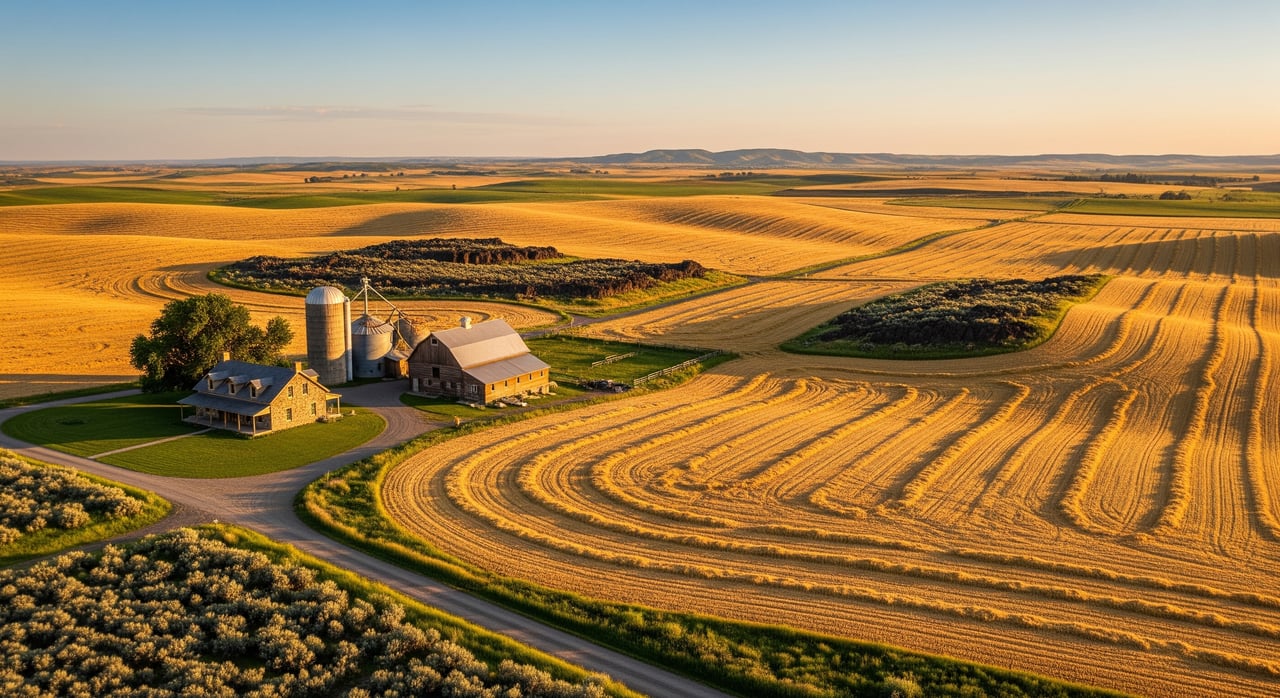
Thinking about investing in dryland farms in Sherman County? This landscape can be a strong long-term play if you understand how local weather, soils, and access shape income. You want reliable cash flow without surprises from leases, roads, or government programs. In this guide, you will learn how dryland operations work here, which leases fit your goals, what to check before you buy, and how to manage risk. Let’s dive in.
Why Sherman County dryland
Sherman County sits in a semiarid zone where most moisture arrives in the winter. That means dryland systems focus on conserving soil moisture for crops like winter wheat, spring wheat, barley, and pulse crops. Year to year yields can swing with rainfall timing, so you should underwrite conservatively.
Cereal and pulse rotations dominate, with grazing leases common on marginal acres. Delivery costs matter. Distance to grain elevators and co-ops can change your net price at the farmgate, so trucking routes and seasonal road limits should factor into your model.
You will also find growing interest in renewable energy across parts of north‑central Oregon. If a parcel has wind or solar easements, they can affect use and income. Make sure you confirm any recorded energy rights during title review.
How leases shape returns
Your lease choice sets your risk and reward. The right structure depends on your tolerance for yield swings and your operator’s preferences.
Common lease types
- Cash rent: Fixed dollars per acre. Predictable for you, more production risk on the operator. Often annual or multi‑year.
- Crop share: You and the operator split the crop or revenue. Local splits vary. Aligns incentives but adds volatility to landowner income.
- Flex lease: A base cash rent that adjusts with yield or price thresholds. Useful where weather variability is high.
- Custom farming: Operator performs fieldwork for set fees. Less common for long-term leases.
- Grazing leases: Paid per acre or per AUM on pasture or marginal ground.
Key terms to negotiate
- Length and renewal: Multi‑year terms often improve operator commitment and soil care, while shorter terms add flexibility for you.
- Inputs and costs: Spell out who pays for seed, fertilizer, chemicals, fuel, and repairs. This is essential for crop share or flex leases.
- Maintenance and capital items: Clarify fence repairs, road upkeep, gates, and any major improvement responsibilities.
- Conservation and programs: Identify who follows conservation plans and manages USDA program compliance.
- Insurance and indemnities: Decide who buys crop insurance, who files claims, and who receives payments.
- Termination and buyout: Include notice timing and any compensation for unexhausted inputs or improvements.
Land and soils to evaluate
Dryland value lives in soils, slope, and access. A few hours on the ground can reveal what maps do not.
Soils and productivity
Use the NRCS Web Soil Survey to identify soil map units, capability class, slope, rock content, and depth to restrictive layers. These traits drive water holding capacity and yield potential. Then walk fields to check for compaction, salinity patches, and noxious weeds.
Set baseline yield expectations from soil ratings, the seller’s historical yield records, and county data. Adjust for seasonal variability, since drought years can pull averages down.
Topography and erosion
Look for rills, gullies, and depositional areas. Highly erodible land can affect eligibility for federal payments and may require certain practices. Ask for any existing NRCS conservation plans or contracts tied to the parcels.
Access, roads, and trucking
Confirm legal access to every tract. Note whether access is by county road, deeded easement, or private road that crosses third-party land. Sherman County roads are often gravel, and spring thaw can restrict heavy trucks. Check typical haul distances and bridge weight limits to your likely buyers.
Utilities and water rights
Most dryland parcels operate without irrigation, but that does not mean water is irrelevant. Ask the Oregon Water Resources Department about any wells, springs, or historical rights, even if only for stockwater. If the property has a home site, verify power, septic, and fuel access.
A practical due diligence checklist
Follow a clear process to reduce surprises and support clean underwriting.
Title and encumbrances
- Order a title commitment and read it closely for easements, mineral rights, liens, and recorded leases.
- Confirm legal access for each parcel and any road maintenance obligations.
Programs and compliance
- FSA: Request maps, base acres, ARC or PLC enrollment history, and yield history tied to the farm.
- NRCS: Confirm highly erodible land status, conservation plans, and any EQIP or CSP contracts.
- OWRD: Search for water rights for irrigation or stockwater.
- County planning: Check zoning and potential siting issues for future projects such as renewable energy or rights of way.
Soils, weeds, and agronomic history
- Pull NRCS soil maps and note limitations like slope or shallow depth.
- Review fertilizer and pesticide records, recent soil tests, and crop rotations.
- Inspect for noxious weeds like medusahead, cheatgrass, or diffuse knapweed that may increase management costs.
- Consider wetlands or listed species if site features suggest habitat concerns.
Production and financial records
- Request 3 to 10 years of yield sheets, bin tickets, and crop insurance claim history.
- Inventory bins, fences, corrals, and any irrigation or pump units, and confirm ownership.
- Review current leases, tenant references, and property tax responsibility.
Physical inspection and survey
- Walk the fields to evaluate compaction, drainage, and topographic constraints.
- Verify boundaries, fence lines, and improvements. Order a survey if lines are unclear.
- Drive the haul routes and check road conditions under harvest loads.
Insurance and closing items
- Verify taxes and assessments. Review crop insurance policies and how prior indemnities were handled.
- Confirm transfer of FSA program participation after closing.
- Update leases and utility accounts promptly.
Modeling income and costs
Your pro forma should reflect local variability and logistics.
- Yields and prices: Use conservative yield assumptions and stress test drought years. Build price scenarios for cereals and pulses.
- Cash rent benchmarks: Pull county-level benchmarks and adjust for soil quality and distance to delivery points.
- Trucking and harvest: Include haul distances, road restrictions, and any seasonal closures that could add costs.
- Program payments: Verify base acres and enrollment history since program payments can affect income stability.
- Capital reserves: Keep a contingency for road work, fence repairs, or weed control after close.
Risk and mitigation
Dryland investing comes with weather, price, access, and policy risks. You can manage many of these with structure and planning.
- Use conservative underwriting and include downside cases for drought and lower prices.
- Consider a flex or crop share lease to share yield and price risk when appropriate.
- Seek multi‑year leases with experienced operators for stable cash flow and better soil stewardship.
- Maintain working capital for deferred maintenance and unexpected inputs.
- Engage local experts, including OSU Extension, FSA staff, crop insurance agents, and reputable land brokers.
How local guidance adds value
On-the-ground help can save you time and reduce risk. A local broker can coordinate soil and FSA mapping, verify access and easements, and schedule field walks that ground-truth remote research. You also gain introductions to operators, co‑ops, crop insurance agents, and county offices so you can move from offer to closing with confidence.
If you are weighing cash rent versus flex for a specific tract, or if you want help reviewing title schedules for easements, I can coordinate the right local contacts and keep the process on track from first look to final signatures.
Ready to evaluate a dryland purchase in Sherman County with a clear, step-by-step plan? Connect with Tiffany Hillman to talk through your goals and next steps.
FAQs
What makes Sherman County dryland unique?
- Semiarid conditions with most moisture in winter shape rotations like winter wheat and pulses, and yields vary widely with seasonal rainfall.
Which lease type is best for dryland farms?
- Cash rent is predictable, while crop share and flex leases share weather and price risk between you and the operator. The right fit depends on your risk tolerance.
How should I check legal access on a farm parcel?
- Review the title commitment for recorded easements, confirm county road frontage or deeded access, and inspect routes for seasonal or weight restrictions.
Are water rights common on dryland farms here?
- Many dryland parcels operate without irrigation, but stockwater rights, wells, or historical claims may exist and should be verified with the state water agency.
How do I estimate realistic yields for underwriting?
- Combine NRCS soil productivity info, 3 to 10 years of seller yield records, and county data, then stress test for drought and price swings.
What due diligence steps matter most before closing?
- Confirm title and access, pull soils and FSA maps, obtain yield and lease histories, verify program and water right status, and walk fields and haul routes.