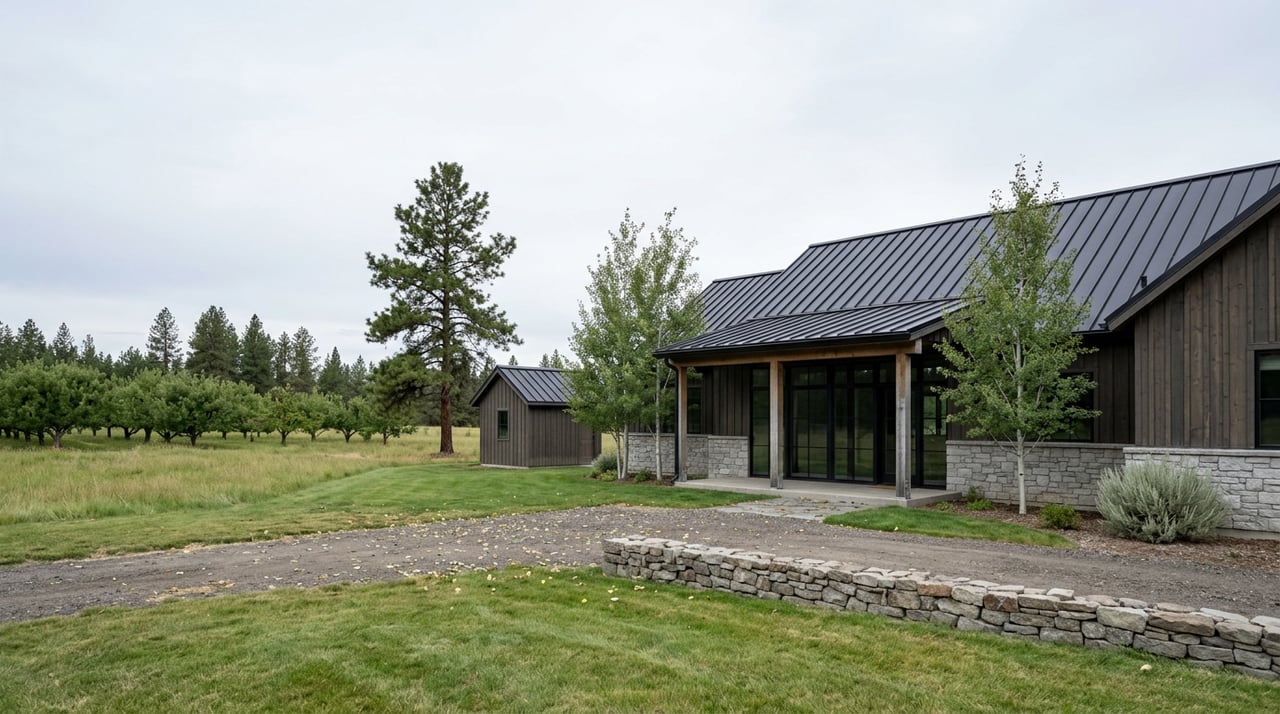
If you're buying or selling a property in Wasco County with its own well and septic system, you've probably assumed both get looked at before closing. That assumption is only half right, and the half that's wrong is the one that costs people money after they move in.
Oregon law requires the seller to test the well. It says nothing about the septic system. No statute, no county ordinance, no automatic inspection triggers when a septic-served property changes hands here. If a septic check happens at all, it's because a lender asked for one, a buyer paid for one, or a specific event pulled North Central Public Health District into the file. Otherwise, the system that treats your household waste can go from one owner to the next without anyone but the seller ever laying eyes on it.
That gap matters most for the people this county attracts: hobby farmers, orchard buyers, and families relocating from places where the rules work differently.
What the law actually requires
Oregon's Domestic Well Testing Act spells out the well side clearly. Once a seller accepts an offer on a property with a domestic well, that seller has to have the well tested for arsenic, nitrate, and total coliform bacteria. The results go to both the buyer and the Oregon Health Authority, and the seller has 90 days from receiving the lab report to send them along. Skipping the test doesn't unwind the sale, but it does put the seller out of compliance with state law.
The tests have to come from a lab accredited under Oregon's Environmental Laboratory Accreditation Program, and results are only good for a year when tied to a property sale. Buy a place in month eleven of that window and you're cutting it close. A retest before closing is often the cleaner path.
Wells on undeveloped land, irrigation-only wells, and spring-fed systems are exempt. If the well only serves a barn or a pasture and nobody drinks from it, the law doesn't apply.
The check nobody has to run
Septic is where the assumption breaks down. Oregon State University's Well Water Program is blunt about it: once a septic system has been in operation, there's no official statewide criterion for inspecting it. A lender can require one. A buyer can request one. But nothing in state law forces a look at the tank, the drainfield, or the baffles just because the property is changing hands.
Oregon's Department of Environmental Quality recommends a pre-purchase evaluation anyway, and for good reason. A septic system is buried. You can't walk the property and tell whether the drainfield is failing or the tank is cracked. The only way to know is to have someone dig in, check the baffles, and measure the sludge and scum layers before the tank gets cleaned.
A septic system failure can run anywhere from $5,000 to $30,000 to repair or replace, depending on what's actually wrong.
That's not a small range to guess on. And because there's no mandatory inspection forcing the question, guessing is exactly what happens in a lot of Wasco County transactions.
The check that does exist here, and what triggers it
North Central Public Health District handles septic permitting for both Wasco and Sherman counties out of its office on East 7th Street in The Dalles. Its environmental health staff step in for new construction, for system alterations, for repairs meant to fix a health hazard, and for authorization notices when a damaged system needs to be reconnected.
That last category isn't hypothetical here. Wasco County's own recovery guidance for property owners affected by the Rowena Fire lays out exactly this process: before anyone can reconnect to an existing septic system, NCPHD reviews it, and if the system was damaged, a repair permit may be required. That's a real, active example of the district exercising authority over a septic system, but it's tied to a specific triggering event, not a routine part of every sale.
In other words, NCPHD absolutely has the authority and the process to evaluate a septic system. What it doesn't have is a mandate to do so automatically every time a property with a septic tank gets listed. Someone has to ask, or something has to happen that requires it.
Why relocators from Washington get this backwards
This is the friction point I see most often with buyers moving in from the Portland side or further north. King County, Washington runs it differently: any property there with a septic system has to be inspected by a certified on-site system maintainer before title transfers, full stop. It's built into the closing process the same way a title search is.
Buyers who've bought or sold in a county with that kind of rule often carry the assumption south with them. They see "Oregon" and "septic" on a listing and figure the same protection is baked in. It isn't. If nobody on the transaction specifically orders a septic evaluation, none happens, and the buyer finds out what they actually bought the first time the drainfield backs up.
What this looks like on paper
| Well test | Septic check | |
|---|---|---|
| Required by state law | Yes, ORS 448.271 | No statewide requirement |
| Who orders it | Seller, after accepting an offer | Whoever wants one: buyer, lender, or nobody |
| What it covers | Arsenic, nitrate, total coliform bacteria | Tank, baffles, drainfield, sludge and scum levels |
| Result validity | One year for a sale | No standard validity, since no standard requirement |
| Who receives results | Buyer and Oregon Health Authority, within 90 days | Whoever paid for it |
| What triggers county involvement | Any sale with a domestic well | New construction, alterations, health hazard repairs, or events like fire damage |
Laid out side by side, the asymmetry is easy to see. One column has a statute number attached to it. The other doesn't.
What this means if you're buying or selling
If you're selling a property with a septic system, you're not legally required to have it inspected. But an undocumented system with no recent pumping record is a harder sell than one with paperwork behind it, and if a buyer's own inspection turns up a problem you didn't disclose, Oregon's disclosure rules put you at risk regardless of whether a formal septic inspection was ever required.
If you're buying, the well test is coming to you automatically because state law requires it. The septic evaluation is not going to show up unless you ask for it or your lender does. A few things worth doing before you write an offer:
- Ask the seller or listing agent whether the septic system has ever had a formal Existing System Evaluation, not just a routine pump-out.
- Confirm the well test results are dated within the past year, and ask what parameters were tested beyond the state minimum of arsenic, nitrate, and coliform.
- If the property has had any additions, remodels, or a bedroom count change since the septic was installed, ask whether NCPHD was involved in permitting that change.
- If you're financing with FHA, VA, or USDA, ask your lender directly whether they require a septic inspection as a condition of the loan, since program overlays vary.
None of this requires a lawyer or an engineer. It requires knowing that the two systems on a rural Wasco County property are governed by two completely different sets of rules, and treating them that way.
A few questions buyers ask
Does the septic system have to pass anything before I can close? Not under state law. If your lender requires an inspection as a loan condition, that inspection has to satisfy the lender, but there's no separate government pass/fail standard the way there is for the well test.
What if the property is on city water and sewer instead of a well and septic? Then none of this applies. The well testing act only covers domestic wells, and NCPHD's septic authority only covers onsite systems. Confirm which utilities actually serve the parcel before assuming either rule is relevant.
Can I skip the well test if I'm not worried about water quality? The seller can't legally skip it, and a buyer can't waive it on the seller's behalf. The test has to happen regardless of whether either party thinks it's necessary.
Who do I call if I want a septic evaluation before I write an offer? North Central Public Health District's environmental health team, at its office in The Dalles, is the right first call for anything involving permit history or an official evaluation. From there, most buyers hire a private inspector to do the physical work of accessing the tank and checking the drainfield.
Rural property in this county comes with real advantages and real homework, and the water systems are usually where that homework lives. If you're weighing a property with a well and septic and want to know what questions to ask before you're under contract, Tiffany Hillman can walk you through it, one parcel at a time.